
Field Notes
Reynisfjara: Black Sand and Basalt
Article summary
Reynisfjara is a black sand beach on Iceland's southern coast, shaped by the meeting of volcanic geology and the North Atlantic. Basalt sand, columnar cliffs and the Reynisdrangar sea stacks make visible the same processes of cooling, fracture and erosion that continue to alter the Icelandic coastline.
Published:
Updated:
At Reynisfjara, the familiar elements of a coastline appear in unfamiliar form. Sand is black, cliffs divide into geometric columns, and the North Atlantic arrives almost uninterrupted against the southern edge of Iceland.
Near the village of Vík, Iceland’s southern coast meets the Atlantic in a landscape formed by volcanic rock and continuously reshaped by the sea.
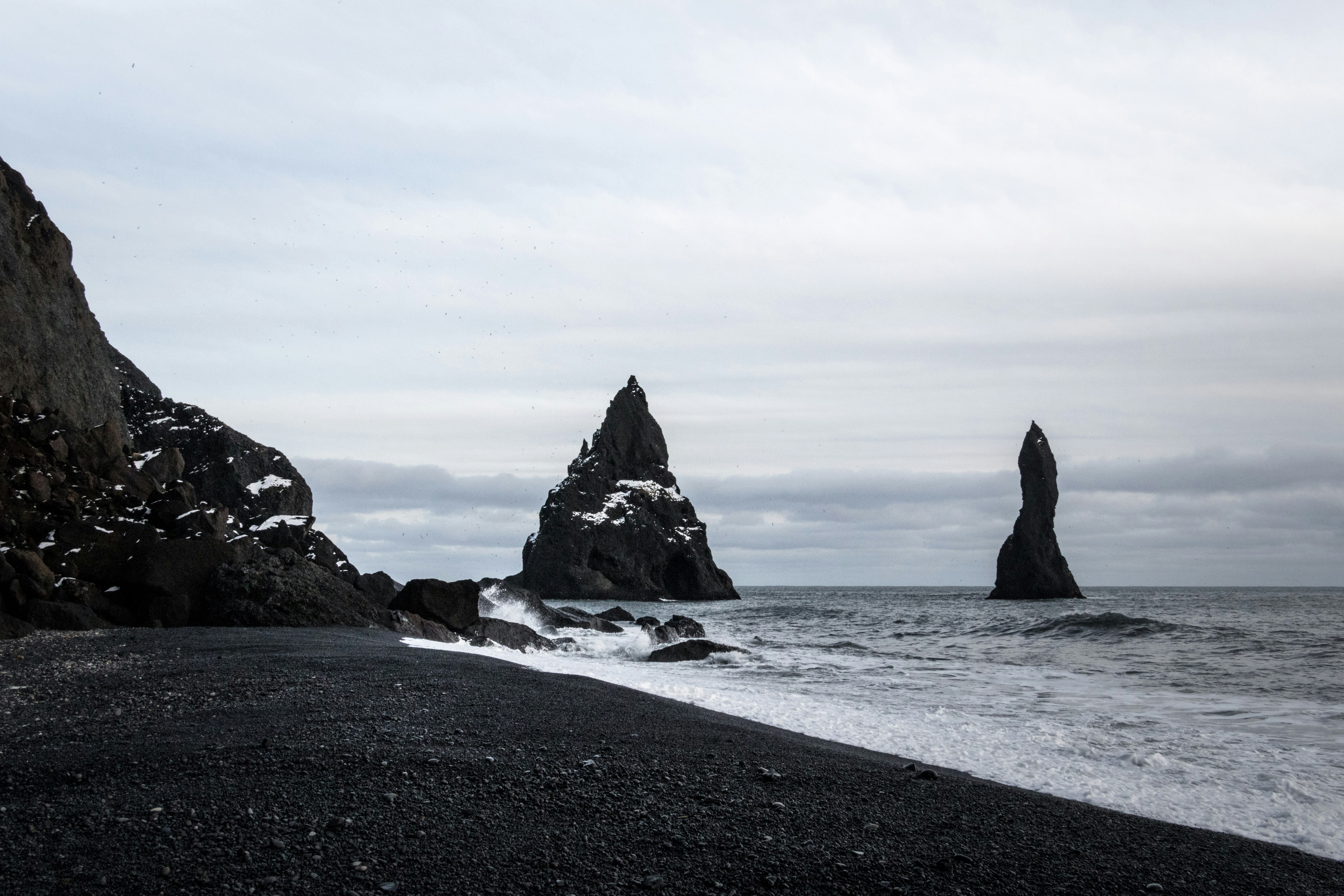
Reynisfjara is best known for its black sand, but the beach is part of a much larger geological composition. Basalt cliffs rise immediately behind the shoreline. Offshore, the Reynisdrangar sea stacks stand separately in the ocean. Between them is an exposed coast where waves, weather and volcanic geology remain unusually visible.
There is little softness to the landscape.
Its character comes instead from contrast: dark basalt against white water, regular columns against an irregular cliff, and a coastline built by volcanic processes being steadily altered by the sea.
Why the Sand Is Black
The colour of Reynisfjara begins with Iceland’s volcanic geology.
Much of Iceland is composed of basalt, a dark volcanic rock formed as lava cools and solidifies. Over time, waves and weather break volcanic material into progressively smaller fragments. Along beaches such as Reynisfjara, these dark minerals accumulate as black sand.
The result differs markedly from the pale beaches associated with quartz-rich continental landscapes.
At Reynisfjara, the material of the island itself determines the colour of the coast.
The beach is therefore not an isolated curiosity. Black sand appears elsewhere around Iceland, reflecting the country’s volcanic origins and the continuing interaction between land and water.
What makes Reynisfjara particularly striking is the concentration of these elements in one place.
The sand does not stand alone. It sits beneath cliffs made from the same volcanic history.
The Geometry of Basalt
Behind the beach rises one of Reynisfjara’s most recognizable features: the basalt columns of the cliff known as Reynisfjall.
Their regular geometry can appear constructed.
It is not.
Columnar basalt forms when thick bodies of lava cool and contract. As the rock loses heat, fractures develop through it. Under the right conditions, these fractures produce long polygonal columns, often with five or six sides.
At Reynisfjara, the columns create a wall of repeating vertical forms along part of the cliff. Some sections resemble steps; others continue upward before disappearing into less regular rock.
The effect is architectural without architecture.
Straight edges, repetition and proportion emerge from a geological process rather than a drawing. It is one reason basalt formations have become so closely associated with the visual identity of Iceland: natural structures that appear almost deliberately composed.
Reynisdrangar
A short distance offshore, several basalt sea stacks rise from the Atlantic.
Known collectively as Reynisdrangar, they are remnants of a coastline gradually altered by erosion. Rock that was once connected to the surrounding land has been separated as waves exploited fractures and weaker sections of the cliffs.
Icelandic folklore offers another explanation.
According to one tradition, the stacks were trolls caught attempting to pull a ship ashore. Daylight arrived before they could return to safety, turning them to stone in the sea.
The geological and folkloric explanations belong to very different ways of understanding a landscape, but their coexistence is characteristic of Iceland.
For centuries, unusual geological forms acquired stories alongside names. Cliffs, rocks, waterfalls and lava fields became part of both the physical and cultural geography of the country.
At Reynisfjara, the sea stacks remain the most visible example.
A Coast That Demands Distance
Reynisfjara is beautiful, but it is not a passive landscape.
The beach is exposed directly to powerful North Atlantic waves. So-called sneaker waves can travel significantly farther up the shore than the waves preceding them, creating conditions that are difficult to judge by observation alone.
Fatal accidents have occurred at Reynisfjara.
Visitors are therefore asked to pay close attention to the beach’s warning system and maintain a substantial distance from the water. Conditions can change quickly, and calm-looking intervals should not be interpreted as evidence that approaching the shoreline is safe.
That danger is not separate from the character of Reynisfjara.
The same ocean responsible for shaping its cliffs, isolating its sea stacks and breaking volcanic rock into sand continues to work on the landscape.
Reynisfjara is not finished.
It is a coastline still being made.
More to read


Join The Reserve.
Be the first to know about new collections and exclusive offers.